Dâmbovița River
Back to all places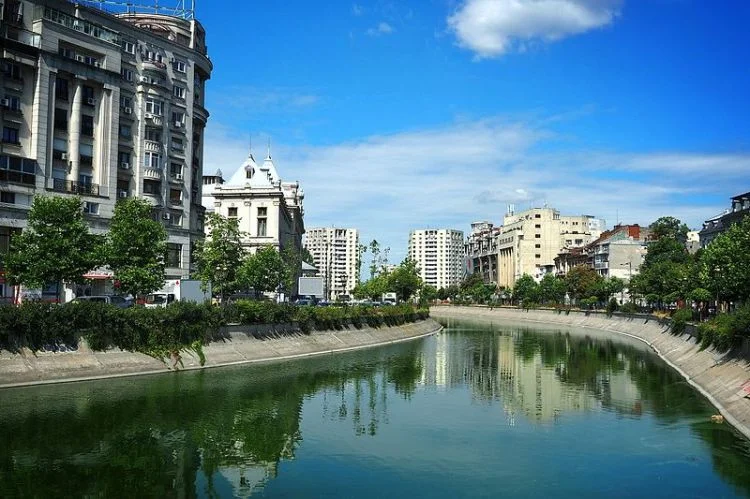
The Dâmbovița is a river in Romania. It has its sources on the Curmătura Oticului, a mountain pass that separates the Iezer Mountains from the Făgăraș Mountains proper. It passes through Bucharest and flows into the river Argeș near Budești, in Călărași County. Its length is 286 km (178 mi) and its basin size is 2,824 km2 (1,090 sq mi). Dâmbovița County is named after the river.
The name of the Dâmbovița is of Slavic origin, derived from Common Slavic dǫbŭ, meaning "oak", as it once flowed through the oak forests of the Wallachian Plain. Its upper course, upstream from the Valea Vladului, is also called Valea Boarcășului.
For centuries, Dâmbovița was the main source of drinking water for the city of Bucharest. While there were a few dozen water wells, most of the water in Bucharest was distributed by water-carriers.
Bucharest folklore mentions the waters of Dâmbovița as "sweet", and even at the beginning of the 18th century, Anton Maria del Chiaro considered it "light and clean". However, toward the end of the 18th century, as the population of Bucharest increased, the river ceased to be as clean, and hence the need of the aqueducts. The earliest aqueducts with public fountains (cișmele) were built during the rule of Prince Alexander Ypsilantis. Many watermills were built on the Dâmbovița, most of them owned by the prince, the monasteries or boyars.
https://en.wikipedia.org/wiki/D%C3%A2mbovi%C8%9Ba_(river)
Photo: Ștefan Jurcă
44.81147, 25.50031